
A single-handed trip from the Mersey to Piel, Ravenglass, Ramsey, Isle of Whithorn, Kippford and Whitehaven — with the usual mixture of tides, mud, helpful people and minor engineering lessons.
By Alistair Roaf
Delayed Departure
After a month trapped by the broken Brunswick lock, Lillebolero finally escaped the marina with a freshly cleaned hull and the promise of some proper cruising. Within five minutes of freedom, however, the engine exhaust temperature was high and still rising. I throttled back, which helped only a little, then stopped the engine near Dukes buoy and opened the seawater strainer. There was some mud in it, so I cleaned it, refitted it and restarted the engine. It was a little cooler, but still not right. I anchored near Egg buoy, just off Wallasey’s Egremont Promenade.
I removed the front cover plate of the raw seawater pump and inspected the impeller. It was fine. Replacing the cover plate was another matter. The fine rubber O-ring that fitted between the pump casing and the cover plate had, somehow, grown. Whichever way I tried to refit it, part of it refused to sit in its groove. I searched the boat for my replacement impeller kit, which should have included a new O-ring. It could not be found. I searched again: no joy. Naturally, I later found it at home after the holiday. I then tried all sorts of unsuccessful ways to seal the pump cover plate. At one point I even made a gasket out of chart paper, but I still could not seal the pump or get water flowing around the engine. As is apparent, I am not an engineer. By then it was Friday evening, so I phoned Andy Morley at Bluepoint for advice. He left his end-of-day drink, went back to his shop, found an impeller kit for my engine and confirmed it had an O-ring. With the tide falling, there was not much more to be done, so I spent the first night of my holiday at anchor, in sight of my office across the river.
At 06:30 on Saturday morning, Andy appeared alongside in Bluepoint’s ten-metre steel workboat, Agwi, and passed me the new impeller kit. I fitted the new O-ring, started the engine and water came out of the exhaust. Happy days: the holiday was back on. Andy departed after saving the day, again. Thanks, Andy. I weighed anchor and motored out of the Mersey, heading north for Piel Island. The engine was still running warm, but by mid-afternoon I was anchored in Bass Pool, south of Piel Island.
North to Piel and Ravenglass
At 05:54 the next morning, I weighed anchor and motored out of the Barrow channel. At 06:47 the engine was off and I was sailing for the first time of the holiday, which felt wonderful. A backing force 3 stayed with me all morning. It started in the southeast and, by the time I arrived off Ravenglass at lunchtime, had swung round to the northwest.
I had not been into the drying harbour of Ravenglass before. The chart stated that the soundings were taken from a survey in 1843 — only 180 years ago. It also said other depths were taken from aerial photography in 1985, a mere 40 years ago. What could go wrong? I decided to give it a go and motored in two hours before high water, carefully monitoring the echo sounder. Soon after entering the harbour I ran out of water and came to a sudden stop at the confluence of the three rivers that make up the harbour. I threw out the anchor and waited for the tide to lift me clear as it flooded past at two and a half knots, while I enjoyed the view of the Lake District hills.
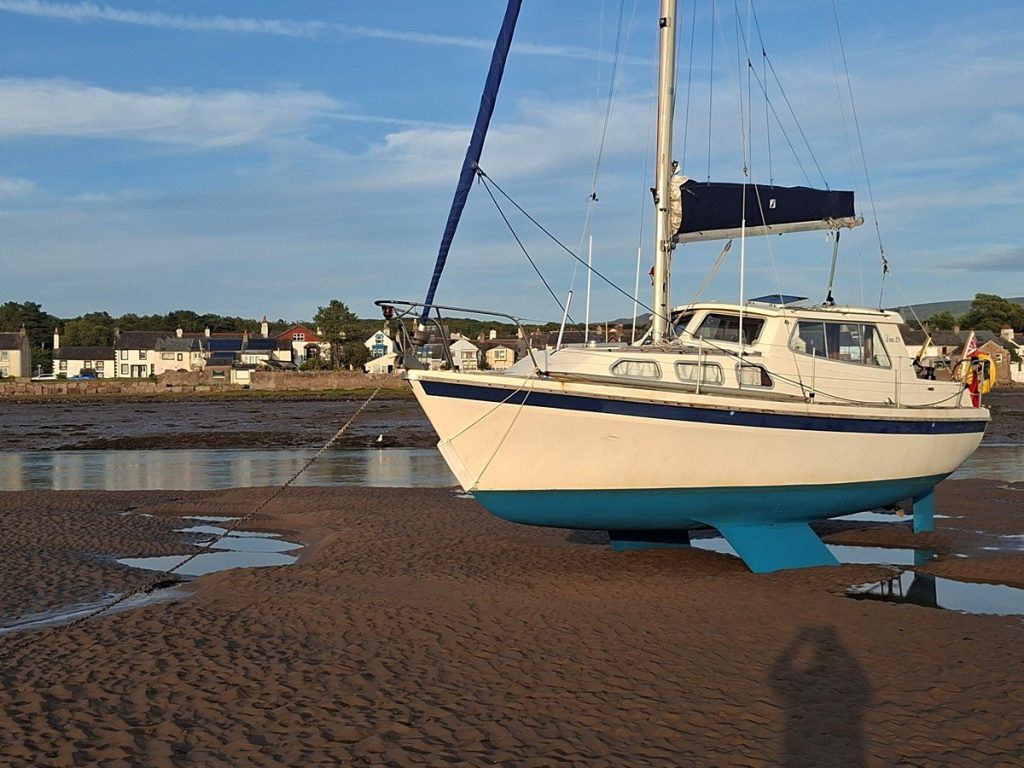
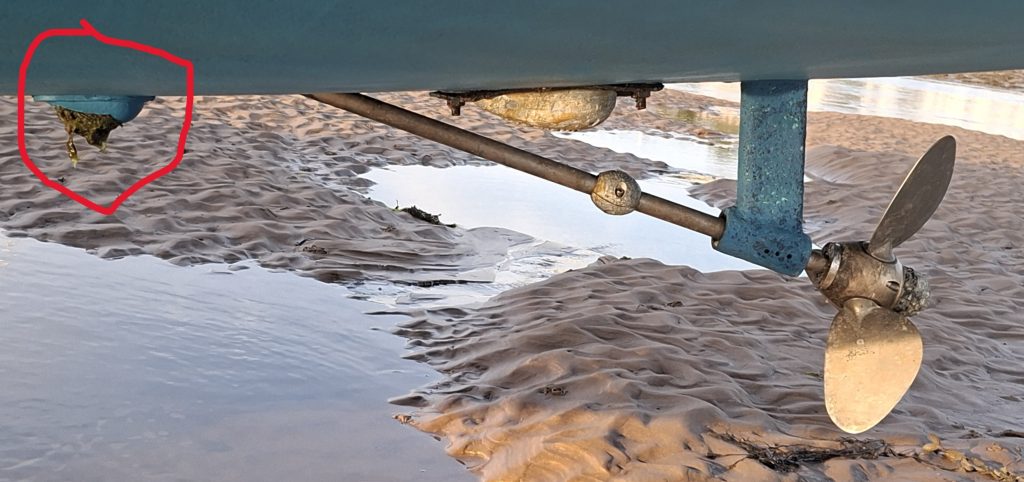
At high water, I shifted anchorage upriver and waited for the harbour to dry out. Once it had, I was able to walk around the boat and found a large clump of weed jammed in the engine seawater intake. I removed it promptly. After that, the engine ran seven degrees cooler. Problem solved.
Across to Ramsey
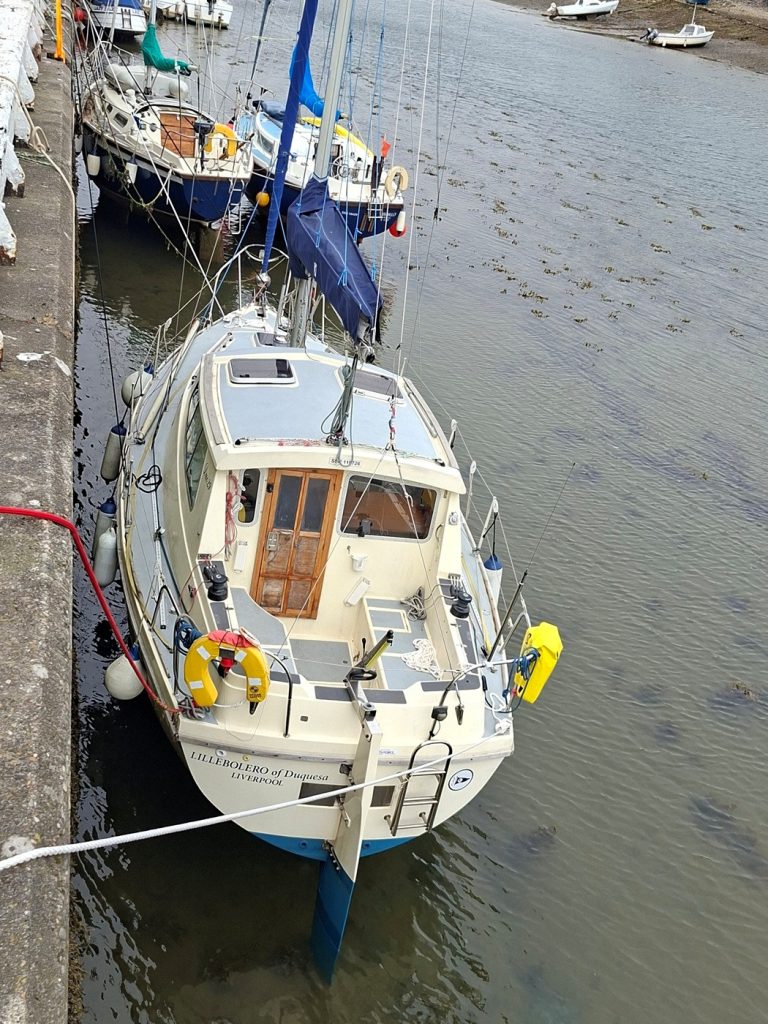
Just before dawn, with the harbour calm and quiet, I gently motored out on the high tide. A couple of hours later, with a steady north-westerly breeze, I sailed close to Ramsey on the Isle of Man. The boat made good progress, and I anchored off the breakwater to wait for the tide before securing to Town Quay, where Harbour Keeper Tony took my lines. I always get a friendly welcome at Ramsey.
Isle of Whithorn Encounters
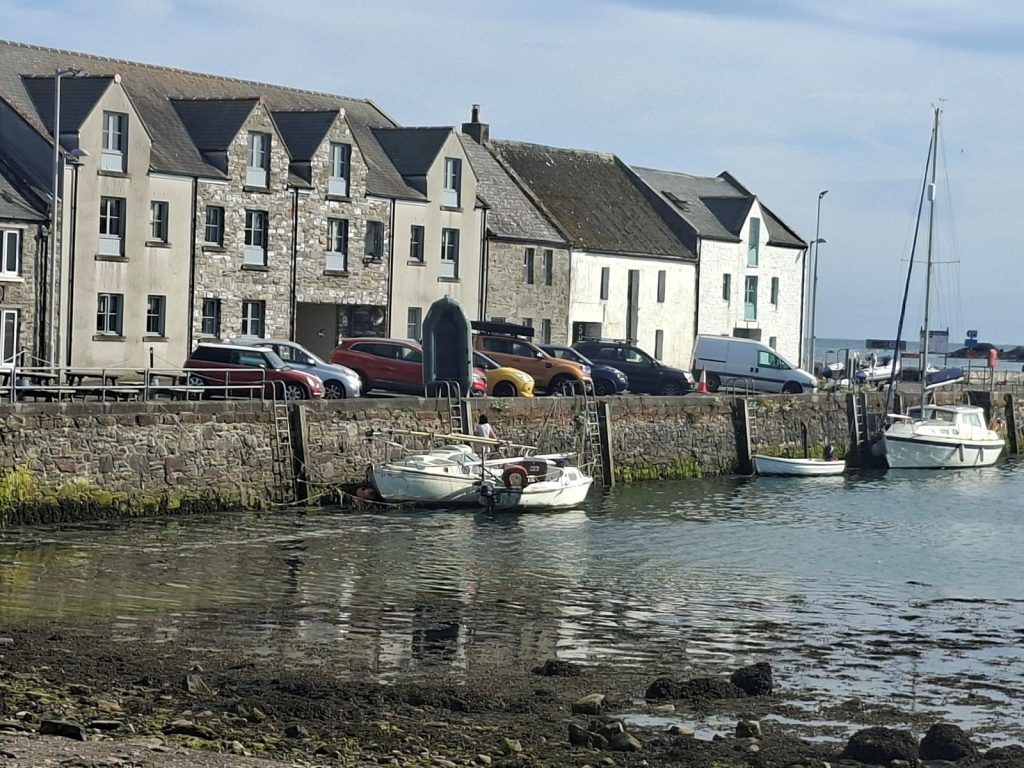
The next morning, after the tide had refloated the boat, I set off for the village of Isle of Whithorn in Dumfries and Galloway. I motored across because I wanted to charge the batteries, then again had to anchor and wait for the tide before berthing alongside the harbour wall.
There I met two young men, both also sailing Westerlies single-handed around Scotland. One worked in IT and had installed Starlink broadband on his boat, which was faster than what he had at home. He was “working from home” as he sailed around Scotland. He said the only issue came during video calls, when the boat rolled and people could see him moving.
In the Steam Packet Inn, I met a bloke who had lived in Bootle — small world — and a fisherman who had sailed dinghies before beginning his fishing career, after being told to leave school following an altercation. I liked the place.
Feeling a Way into Kippford
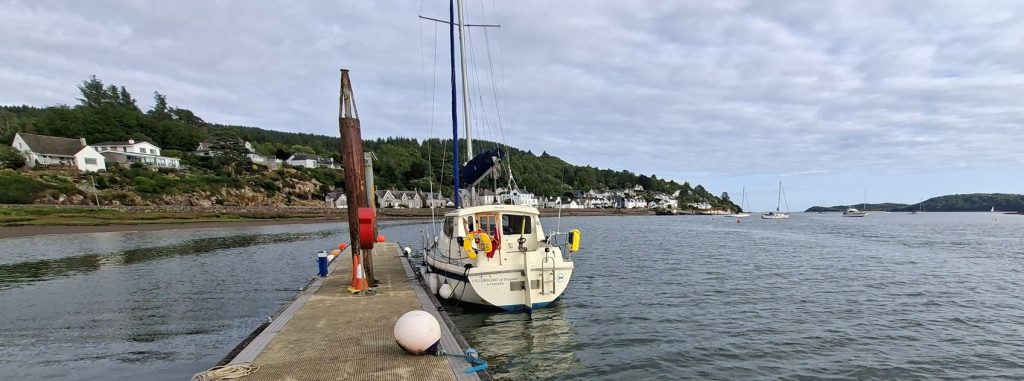
On the following morning’s tide, I headed up the Solway Firth for Kippford. It was a beautiful sail along the coast before I again anchored to await the tide. When I did head upstream to the village, I expected the channel to be marked as described in the almanac. It was not. The marks had been removed because the sailing club did not want to be liable for damage to any vessel that might be following them. So it was another case of feeling my way up the channel with the echo sounder and looking for the faster-flowing water, which fortunately worked. I secured alongside the sailing club pontoon and paid my £20 mooring fee at the nearby pub. Kippford felt a little like Abersoch: there were more English than Scottish accents, and the riverfront properties looked like show homes with manicured gardens.
Whitehaven and the Run Back
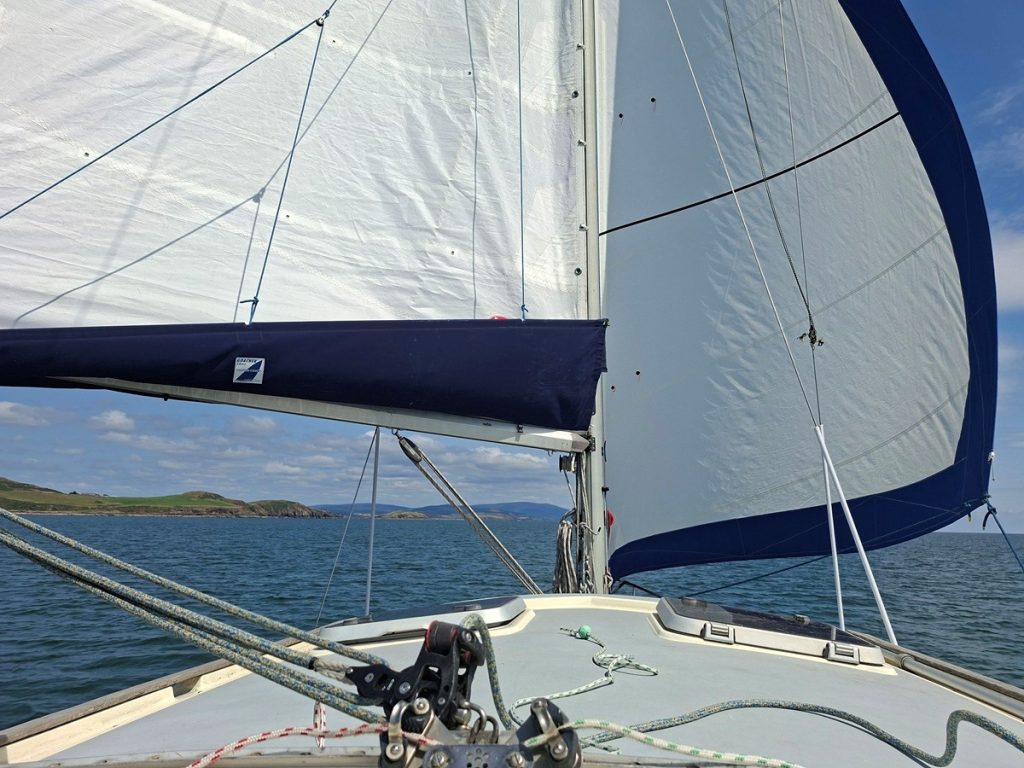
The next morning, I slipped from the pontoon and headed downriver, more confident now about where the channel lay. Once clear, I set the genoa and let the northerly wind push me across the Solway Firth and down to Whitehaven, the first marina of the trip. Shore power felt like luxury. I also walked to Screwfix to buy some additional mooring rope, as there was no chandler at the marina. The distance was only two miles, but this being Cumbria, it was up a steep hill. I caught a bus back to the marina.
On my final passage, I departed Whitehaven and motored across to Ramsey to ensure the batteries were full when I left the boat there. The following day, I waited for the vessel to take the ground and set my lines before leaving Lillebolero and taking a taxi to Douglas for the ferry. The taxi driver followed the mountain route and clearly enjoyed the TT course, rounding bends at exciting speeds and slowing only for the vehicles in front.
Reflections
It was not the long, trouble-free summer cruise I might have imagined while waiting for Brunswick lock to reopen, but it was a very satisfying one. There were new harbours, helpful friends, interesting strangers, plenty of tide-watching and enough small problems to keep the trip memorable. Above all, it was a reminder that even a modest passage plan can turn into a proper adventure once the lines are slipped.
